

Could You Have High Cholesterol Without Knowing It? What You Need to Know
High cholesterol doesn’t always come with a warning. You may feel perfectly fine, go about your daily routine, and enjoy your favorite dishes without realizing that elevated cholesterol levels are quietly putting your cardiovascular health at risk.
September is National Cholesterol Education Month! This is a great time to have your cholesterol checked, protect your heart, and take control of your health.
Visit the Care Center Clinic, the best primary healthcare provider Philippines, to schedule a checkup. A routine screening with a primary doctor can help identify potential risks early, so you can take the right steps to protect your heart and stay healthy.
What is Cholesterol and Why Does it Matter?
Cholesterol is a waxy, fat-like substance (lipid) found in your blood. While cholesterol often gets a bad reputation, your body actually needs it for certain functions.
About 20% of the cholesterol in your bloodstream is from the food you eat, such as eggs, cheese, fried foods, and processed meat. Your liver and intestines produce 80% of the remaining cholesterol that your body needs to remain healthy. This includes helping your body make vitamin D, hormones (including testosterone and estrogen), and substances to digest food.
The problem starts when cholesterol levels in your blood become too high and build up in your arteries. This can increase your risk of a heart attack or stroke. That’s why keeping your cholesterol within a healthy range is an important part of maintaining your health.
What are Lipoproteins and Triglycerides?
Lipoproteins move cholesterol and triglycerides through your bloodstream. Lipoproteins are particles made of fat (lipids) and proteins.
The two main types of lipoprotein:
- Low-density lipoprotein (LDL) is sometimes referred to as the “bad” cholesterol because too much of it can build up in the walls of your arteries, increasing the risk of heart attack or stroke.
- High-density lipoprotein (HDL) is sometimes called “good cholesterol” because it acts as a cleaner, ushering extra LDL cholesterol away from your arteries and back to your liver to be broken down.
Triglycerides are the most common type of fat found in your blood. High triglycerides increase your risk of stroke, heart attack, and acute pancreatitis.
What Causes High Cholesterol?
Certain genetic, health conditions, and lifestyle habits can contribute to high cholesterol. These include:
1. Risk factors
- Eating highly processed foods that often contain a lot of added sugar and/or refined carbohydrates
- Eating foods high in saturated fat
- Not getting enough physical activity
- Being overweight
- Smoking
- Drinking too much alcohol
- Having diabetes
- Having kidney disease
- Having other medical issues such as liver disease or an underactive thyroid
2. Genetic condition – Some people are predisposed to high cholesterol because it runs in the family.
3. Other health issues – The build-up of plaque in the arteries is also associated with the following conditions:
- Coronary artery disease
- Peripheral artery disease
How to Test Cholesterol?
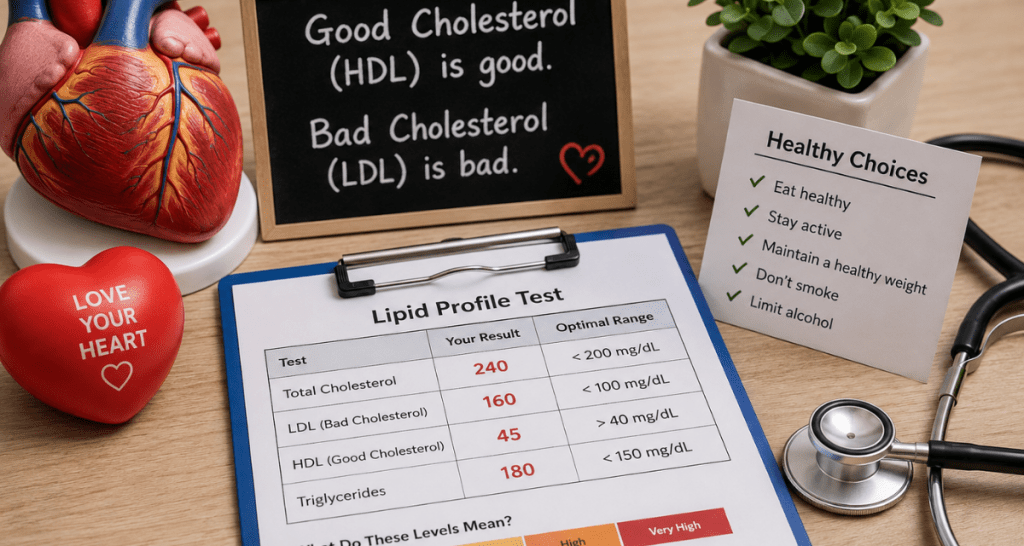
Your doctor can recommend a lipid profile, also called a lipid test, to measure fats, including cholesterol and triglycerides, in your blood. This test can help identify if you have a high risk for cardiovascular disease.
The lipid test can also monitor cholesterol levels over time. It allows your doctor to see whether your cholesterol is improving with treatment or becoming elevated, which may indicate that your treatment plan needs to be adjusted.
If you haven’t had your cholesterol checked recently, book a consultation at the Care Center Clinic, a PhilHealth YAKAP-accredited clinic, and talk to your primary doctor whether a lipid test is right for you.
In general, these numbers are in the healthy range if you have no other risk factors:
HDL | 45 mg/dL or higher |
LDL | Less than 100 mg/dL |
Total cholesterol | For adults over 21 years old: 100-199 mg/dL Aged 20 and younger: 75-169 mg/dL |
Triglycerides | Less than 150 mg/dL |
Healthy levels for HDLs, LDLs, triglycerides, and total cholesterol vary by age and sex. Ask your doctor what levels are ideal for you.
How to Lower Cholesterol?
If your cholesterol levels are high, your doctor at the Care Center Clinic can assess your overall health and recommend the most appropriate treatment plan.
Cholesterol-lowering medicine
Your doctor can prescribe cholesterol-lowering medicine, such as statins, which work by slowing down how much cholesterol your liver produces.
Lifestyle changes
Making healthier lifestyle choices can also help lower cholesterol and support better heart health:
- Maintain a healthy weight.
- Choose heart-healthy dishes.
- Engage in physical activities.
- Quit smoking.
- Avoid drinking too much alcohol.
Bottomline
High cholesterol can develop quietly, but taking action early can protect your heart. Knowing your cholesterol levels, eating a heart-healthy diet, staying physically active, and avoiding habits that can raise cholesterol can make a big difference to your heart health.
This National Cholesterol Education Month, visit the Care Center Clinic and talk to a primary doctor about your heart health and whether a lipid test is right for you.
Frequently Asked Questions
1. What is cholesterol?
Cholesterol is a waxy, fat-like substance found in your blood. Your body needs cholesterol to make hormones, vitamin D, and substances that help digest food. However, having too much cholesterol in your blood can increase your risk of heart disease and stroke.
2. Does high cholesterol have symptoms?
High cholesterol often has no noticeable symptoms, which is why having your cholesterol checked is important, especially if you have risk factors for heart disease.
3. What causes high cholesterol?
High cholesterol can be influenced by genetics, diet, lack of physical activity, being overweight, smoking, excessive alcohol intake, and certain health conditions.
4. Can I lower cholesterol without medication?
It’s possible. Depending on your cholesterol levels and risk factors, your doctor may recommend lifestyle changes such as eating heart-healthy foods, exercising regularly, quitting smoking, and limiting alcohol.
5. Where can I get my cholesterol checked?
You can consult a primary doctor at the Care Center Clinic to discuss your cholesterol and heart health. Your doctor can recommend a lipid profile and help you understand your results and next steps.